
Transform your home with expert craftsmanship! From loft conversions and home extensions to roof repairs and plastering, we offer full-scale building and renovation services across London, Berkshire, Slough, Bracknell, and Reading. Whether you're upgrading or expanding – we’ve got you covered.
Book A Free Consultation
Plaster and Render Damage: Causes & Solutions
Homeowners experience plaster and render damage during home renovation and construction, which is one of the most common problems. Cracks, peeling, or structural damage, regardless of the ugliness of the stuff you have to deal with, the principles and the remedies can be used to preserve the beauty and integrity of a home. In this blog, we will discuss the most common causes of plaster and render damage and how Kromrych Builders can assist you with their repair.
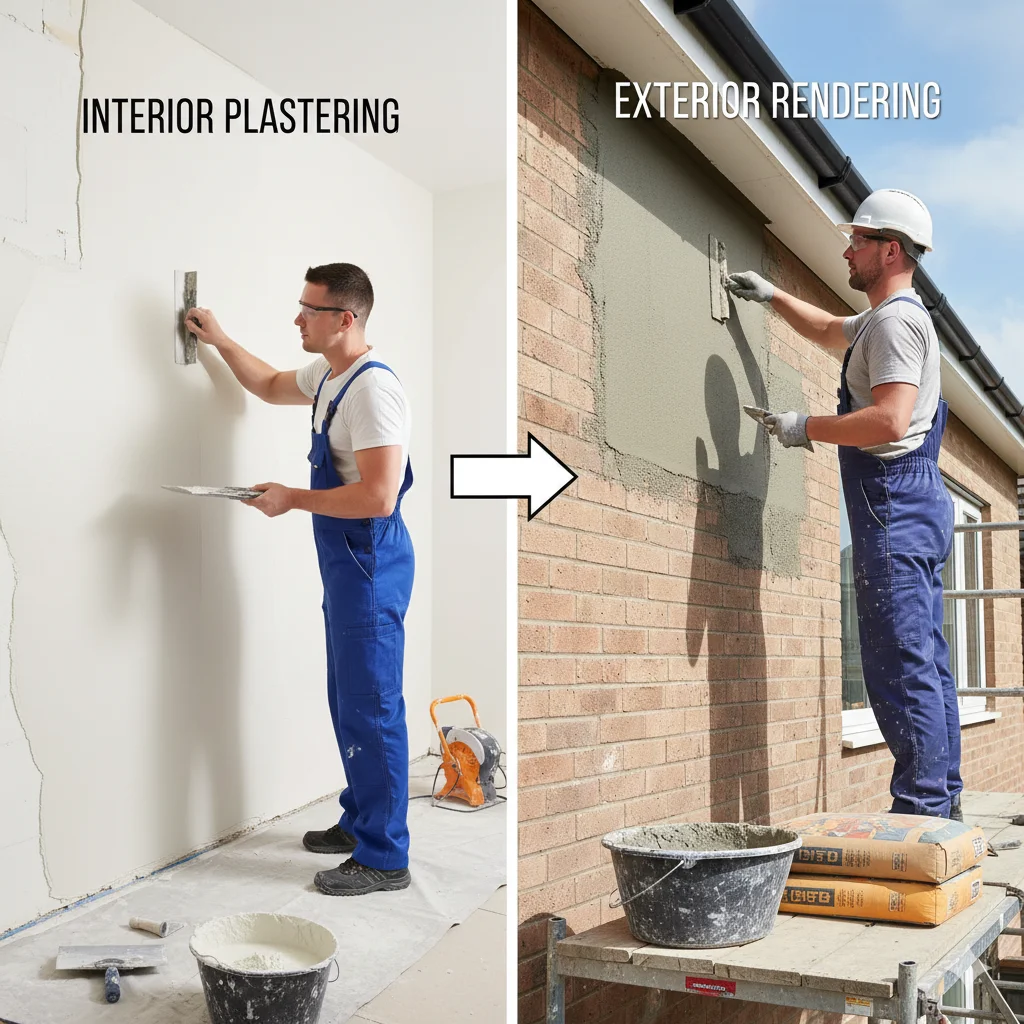
Plastering and rendering are the two processes that are critical in the provision of smooth and durable surfaces in a building. Plastering is usually used on interior walls to provide a smooth surface, whereas rendering is applied on exterior walls to protect them from the elements. The two methods use a layer of material on the wall; however, they differ in composition and application.
The process of plastering is commonly performed using gypsum-based products; however, rendering is mainly performed using cement-based products. The two techniques add beauty to an entire building and are critical to ensuring that the building is not exposed to the elements, such as dampness, heat, and decay.
The leading cause of damage to plaster and render is moisture. Water leaking through the walls may weaken the plaster or render, causing cracks or even peeling. It may be due to leaking pipes, faulty drainage systems, or even a defective seal on the outside of your house. The moisture may also contribute to the growth of mold and mildew over time, thereby aggravating the situation.
Extreme temperature swings can result in the expansion and contraction of plaster and render, causing warping and cracking. It is most prevalent in areas with severe winters and summers. It is because the movement of materials over time can weaken surfaces that might require repairs or replacement.
Indeed, poor installation can be blamed for plaster and render damage. Failure of the plaster or render would occur early if it were not done correctly. It may be due to incorrect proportions in the mixture, under-preparation of the wall, or an inadequate drying period before the surface is painted or adorned.
The houses do settle, and any little movement of the foundation will result in cracks in the plaster and the render. The movement may cause stress fractures in the materials and especially in old houses. Such problems may seem insignificant at first, but can grow and become more serious if not addressed immediately.
The wear and tear of daily living in a home may also cause damage to plaster and render. For example, furniture dropped about, nails in the walls, or children running into the walls can all cause surface damage over time. Walls are more susceptible to scratches, dents, and other surface damage in high-traffic locations like hallways.
Some chemicals, such as cleaning agents or even paint contents, may react with plaster and render it unusable. It may cause discolouration, flaking, or even degradation of the surface material.
In the case of minor cracks or holes in the plaster or render, a basic repair can be completed successfully using a filler or patching compound. After the filler is dry, the surface is to be repainted and then smoothed to create a smooth appearance.
For more severe damage, particularly on exterior walls, you may be required to replaster or render the entire surface. It is a process that involves removing the old layer, repairing existing problems, and then applying a new layer of plaster or render.
Should there be any fear of water damage, waterproofing treatments may be applied to prevent water from reaching the surface. This will help ensure against any future problems that may arise from water damage, especially in places most likely to be damp or prone to flooding.
If the foundation of your home has moved and broken plaster and render, you should fix the structural problems first. This may be in terms of foundation repair or support to keep the walls standing.
Even though simple repairs may be performed independently, when faced with a more serious problem, one needs to seek consultation. Kromrych Builders has focused on rendering and plastering, providing professional services to restore the walls of your home to their former splendor.
Whether they can plaster over wallpaper is a common question homeowners ask. The answer to the short question is no. Plastering over wallpaper can be difficult because the wallpaper may prevent the plaster from adhering correctly. It is the proper method for stripping off the wallpaper and making it ready before plastering.
Yes, you can overpaint new plaster, but before doing so, you must ensure that the plaster has had time to dry and harden. New ones are porous and may admit moisture from the paint, with the result that they adhere poorly and streak. A bonding primer on the fresh plaster is also recommended before painting to achieve better results.
The damage to plaster and render may depend on different reasons, such as moisture or temperature variations, and even bad installation. Nevertheless, with proper repairs and maintenance, you can restore and maintain your walls so they look attractive for years to come. Regardless of the size of the cracks or the extent of the damage, Kromrych Builders will be there to assist. Our skilled workers offer high-quality plastering and rendering services to ensure your home remains safe and attractive.
Plastering a room typically costs $300–$1000, depending on size, wall condition, and finish.
Plaster usually takes 24–48 hours to dry to the touch and up to 7 days to fully cure, depending on thickness and conditions.
Yes, damaged render can be plastered, but the surface must be cleaned, repaired, and properly prepared first for a lasting finish.
To avoid plaster cracking, ensure proper surface preparation, use quality materials, apply in thin layers, and allow adequate drying time.
Decorative plaster is a finish applied to walls or ceilings to create textures, patterns, or artistic effects for aesthetic appeal.
Ready to bring your home vision to life? Our experienced team delivers top-quality construction, repairs, and refurbishments in London, Berkshire, Slough, Bracknell, and Reading - on time and within budget. Let’s turn your ideas into reality today!
Book A Free Consultation