Transform your home with expert craftsmanship! From loft conversions and home extensions to roof repairs and plastering, we offer full-scale building and renovation services across London, Berkshire, Slough, Bracknell, and Reading. Whether you're upgrading or expanding – we’ve got you covered.
Book A Free Consultation
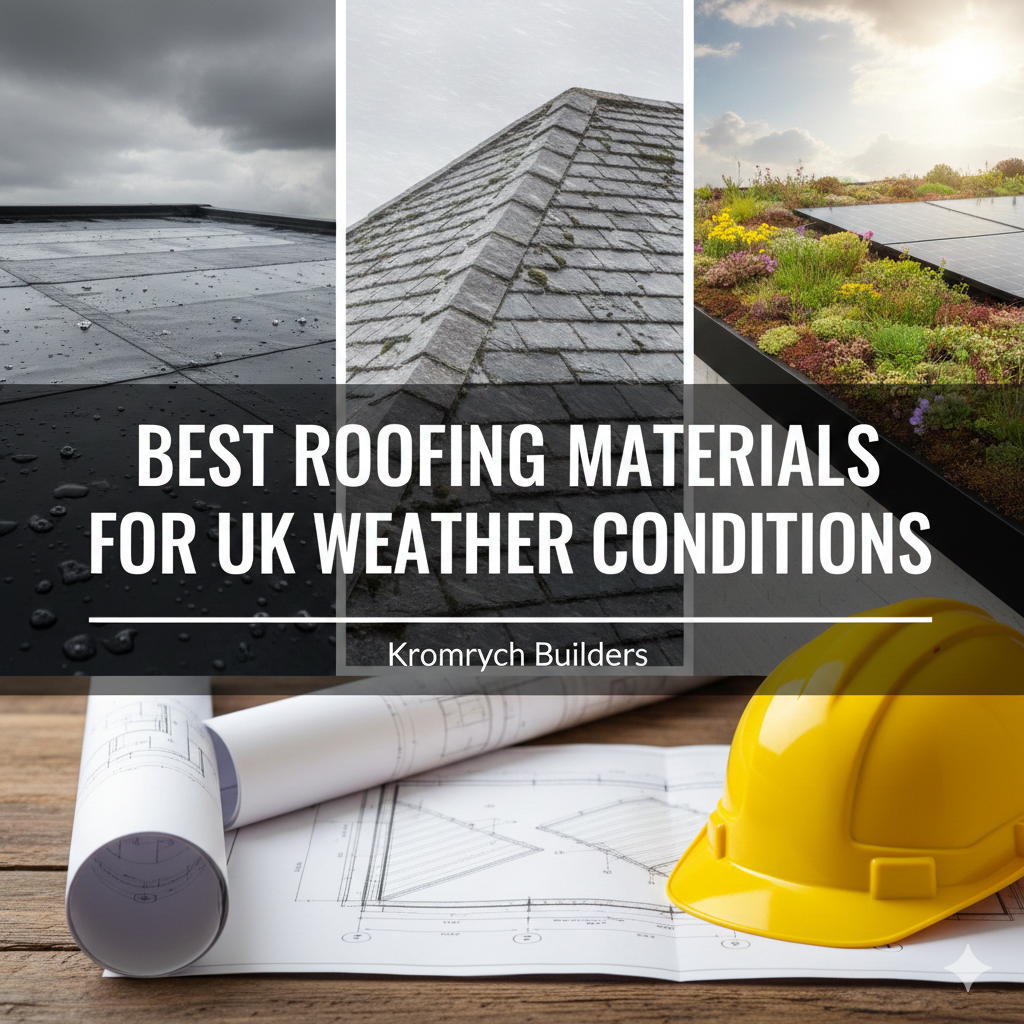
Best Roofing Materials for UK Weather Conditions
When it comes to safeguarding your property against unpredictable UK weather, it is always important to choose the best roofing material. The UK has a diverse range of weather conditions, including heavy rainfall, strong winds, and even freezing temperatures. This means that your roof must be tough, waterproof, and resistant to extreme conditions. This post will discuss the most appropriate roofing materials for flat roofs and other types of roofs, and how they best suit the UK's weather conditions.
Ethylene Propylene Diene Monomer (EPDM) roofing is a widely favored roofing system for flat roofs in the UK. Due to its high weather and water resistance, EPDM is a synthetic rubber that provides very good protection against heavy rain, hail, and UV (Ultraviolet radiation) rays. It is durable, with an average lifespan of 50 years, and can be used in residential and commercial buildings.
Extremely strong and weather-resistant.
Small and simple to set up.
Low maintenance costs
UV and ozone resistant
GRP roofing is another outstanding choice for flat roofs. This roofing material is made using fiberglass material and polyester resin and is known to be very strong and capable of withstanding wet weather in the UK. GRP roofs are completely airtight, and the material does not weaken when moistened.
Strong and highly durable
Waterproof and UV-resistant.
Provides extended security with very little maintenance.
It is easy to bend into various forms.
TPO roofing is also widely used in the UK, particularly among those seeking to be environmentally friendly. It consists of a one-ply membrane, which is heat-welded to form a very strong, seamless surface. TPO roofs are reflective to sunlight, and thus they lower cooling costs; hence, they are suitable in warmer climates.
Reflective qualities cut the cooling expenses.
Easy to install and maintain
Strong and tough enough to withstand the elements.
Flexible and lightweight
In the UK, modified bitumen roofing is a popular roofing material, especially for commercial flat roofs. It is composed of asphalt that has undergone an additive process to increase its flexibility and strength. This roofing material is especially suitable for regions often affected by extreme weather, including heavy rainfall, snow, and wind.
Inexpensive and simple to set up.
Very waterproof and anti-ultraviolet.
Durable (may last up to 20 years when well-maintained).
It may be added with granules to provide more protection.
Although it is mainly used on sloped roofs, metal roofing can also be applied to flat roofs, particularly when weight is a concern in building construction. Standing seam roofing, a variant of metal roofing, is very strong and more effective in strong winds and heavy rainfall.
Extremely strong and weatherproof.
Fireproof and very energy efficient.
Minimal maintenance and protracted life (to 50 years).
Slim and eco-friendly.
To be greener, green roofs are becoming popular within cities. A green roof is vegetation planted on a waterproof membrane to provide insulation and minimize the risk of flooding. Unlike it needs more maintenance, it absorbs rainwater, and is environmentally friendly.
Environmentally friendly
Provides soundproofing and natural insulation.
Reduces the risk of flooding
Fight against urban heat islands.
Slate and tile roofing is an old roofing material commonly used in the UK for pitched roofs. Both materials are very strong and can withstand heavy rain, strong winds, and temperature changes. Slate roofs are especially a good investment, as they can last more than 100 years with proper maintenance.
Durable and able to withstand extreme weather.
Aesthetic appeal
Easy to service and low maintenance.
Highly fire-resistant
The longevity and performance of a roof depend on the proper roofing accessories used during installation. These are flashing, ridge tiles, roof vents, and gutters. All these elements combine to make your roof the best in various weather conditions.
Flashing: Used to stop leaks by sealing corners and joints.
Roof Vents: These should ensure air circulation, which minimizes moisture.
Gutters: This will divert rainwater and prevent roof damage.
Drip Edge Tiles: Seal an inclined roof.
When deciding on the most appropriate roofing material for your flat or pitched roof, it is crucial to ensure your house is not exposed to the elements. Both materials have their benefits; therefore, check the climate at the location where you will build the roof, the roof's purpose, and the costs of each material, and make a choice. Kromrych Builders will work with you and make the appropriate choice of a roofing solution and install it on your house to have a long-lasting and enduring roof in the coming years.
A: EPDM (Ethylene Propylene Diene Monomer) rubber roofing has been believed to be the most suitable material to be used in flat roofing in the UK because it is conservative, resistant to water, and has a long life cycle.
A: The period of a flat roof will be determined by the material. EPDM and GRP roofs have a lifespan of up to 50 years, whereas the bitumen roof has a lifespan of about 20 years.
A: One of the most cost-effective flat roofing options is the modified bitumen roofing. It is also durable and waterproof at a cheaper rate than other substances.
A: You will need to look at such aspects as longevity, element resistance to water, life span, and price. The UK's climate is characterized by heavy rain and variable temperatures, which means materials that can withstand those conditions are needed.
A: The price of a new roof depends on the type of material and the roof size. Depending on the average, a flat roof replacement will cost between 3,000 and 10,000 pounds.
A: To have roofing repair services available to you, you need to search online or call a local vendor, such as Kromrych Builders, to have roof repairs and services done professionally.
Ready to bring your home vision to life? Our experienced team delivers top-quality construction, repairs, and refurbishments in London, Berkshire, Slough, Bracknell, and Reading - on time and within budget. Let’s turn your ideas into reality today!
Book A Free Consultation