Transform your home with expert craftsmanship! From loft conversions and home extensions to roof repairs and plastering, we offer full-scale building and renovation services across London, Berkshire, Slough, Bracknell, and Reading. Whether you're upgrading or expanding – we’ve got you covered.
Book A Free Consultation
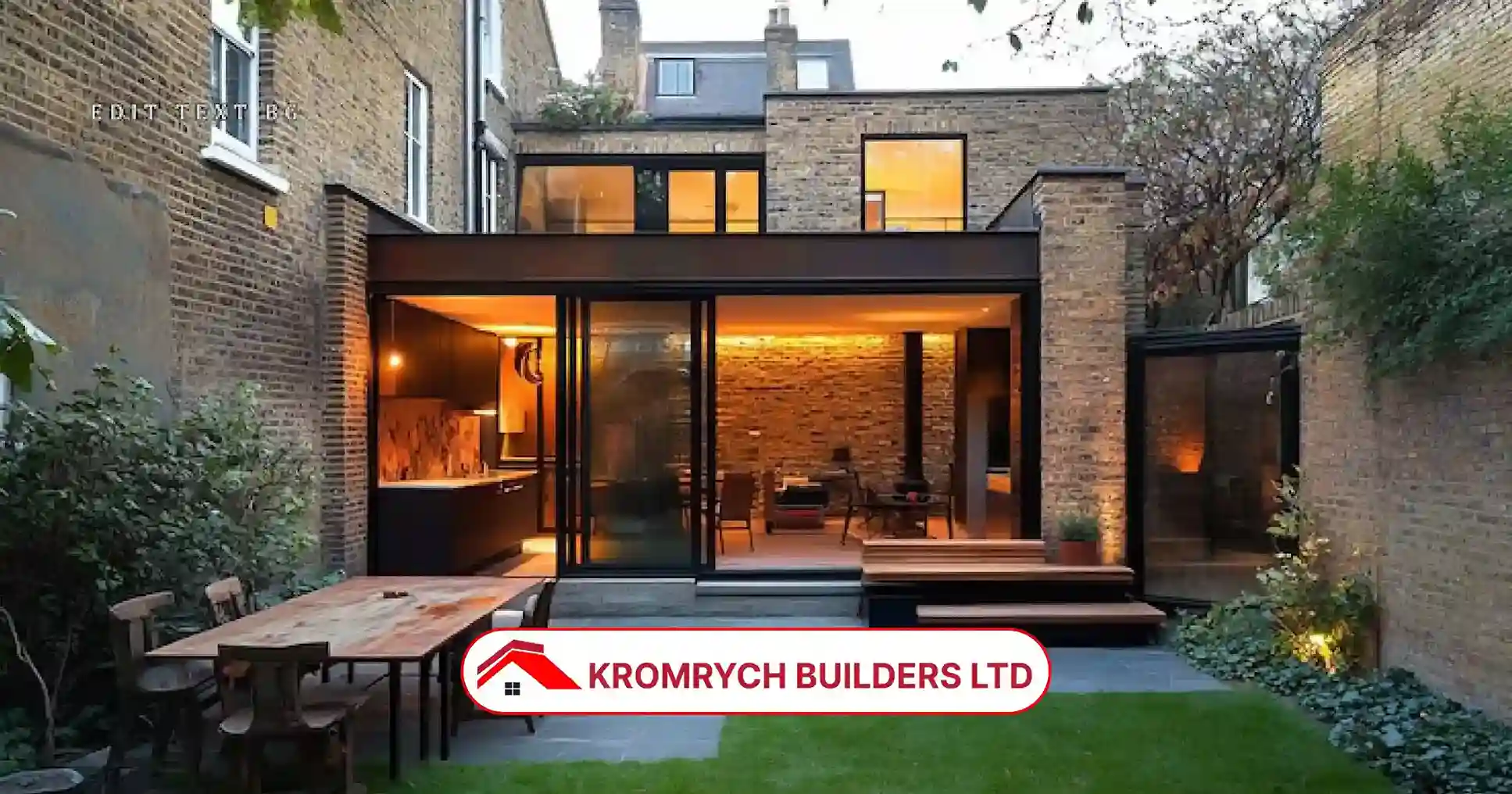
Build a House Extension Step-by-Step
Having an extension of your house may be an excellent idea to have a bigger house to accommodate your family, to have a home office, or to add more space to your house. It enhances the functionality as well as increases the worth of your property. Nevertheless, an extension construction may appear overwhelming because of the different steps that need to be followed, including the planning, budgeting, construction process, and finishing. This step-by-step shows an insight into how to go about making a house extension, providing all the information you would want to know, starting with the pre-conceptualization period and the project completion. Your trusted service provider, Kromrych Builders, will make sure that your extension project will be successfully carried out.
Planning is the first measure for any house extension project. It is vital to clarify the type of extension you desire before entering the construction process. Whatever it is: more space to grow a family or a bigger kitchen to get more people in, knowing what you need, will assist in designing it. The next step will be planning, whereby some of the factors to be considered will be the size of the building that is to be extended and where the addition is to be built.
During this step, you are to consider how the extension will be used in the future. Primary use: Will this be a bedroom, home office, or an entertainment area? Such a choice will affect the layout and design so that the space can be used for the anticipated purpose. Think of how much natural light you desire, how the extension will change the traffic of your house, and how it will influence your outdoor area. An example, a single-storey building may increase the space in your kitchen and dining rooms, whereas a two-storey building gives you additional rooms without crowding too much in your backyard.
The role of a properly planned plan can hardly be overestimated. It is like a blueprint that steers the whole process and prevents mistakes that can be very costly later on.
The current stage, after you have planned the general outline of your extension, is the designing bit. This phase usually entails establishing a working relationship with architects or designers who can translate your ideas into practical and functional solutions. The designation procedure does not consist solely of aesthetics but also of functionality. A skilled designer will see to it that the addition will be in harmony with the rest of your house and, at the same time, will allow you to make good use of the available space.
During the extension's planning, please remember your house's architectural style. Whether your house is modern, traditional, or a combination of both, the new extension must benefit the general look of the house. This portion will see the process of choosing exterior and interior materials that complement what you already have in your home.
Another important element of design is the need to learn about the challenges that the site might be facing. Your designer will survey your land, examine possible problems, and ensure that the extension is structurally sound and that the work done is up to building standards. They will also see to it that the design will satisfy your needs regarding layout, light, and accessibility.
This is when your original vision starts taking shape, so be prepared to explain everything you wish to see to the designer and ensure they understand your vision for your place.
If you want to start construction, you should find out whether your extension needs planning permission. There are smaller additions, like single-storey extensions, that can be categorized as permitted development rights, and in this case, there will be no formal permission required. Nonetheless, any bigger extension is going to necessitate your local council giving you permission to plan the extension.
This is usually done by providing elaborate plans of your proposed extension, including its design, size, and effect on the surroundings. The local council will determine the application, considering the size and appearance of the extension, its effect on other properties, and its conformity with the safety guidelines.
It can also require several weeks or even months to provide the planning permission, so you should also leave this time. In case you are not sure about the planning permission requirement of your extension, you should always get some professional help or seek advice from your local council.
The homeowner is always concerned with one of the most urgent questions to answer: a house extension, or rather, the cost associated with it, namely, how much is a house extension? Depending on the size of the extension, the kind of materials involved, and the design, among other factors, the answer may vary on how much it would cost to have an extension materialized.
The cost of a simple single-storey extension is between 1200 and 1800 per square meter, and a two-storey extension is between 1500 and 2500 per square meter. Conversion of a loft and garage can cost much less, although the cost can go up depending on the changes made to the structure and the finishes needed.
Other costs to consider are architect fees, planning application costs, and consulting structural engineer costs. An estimate of the cost of permits, surveys, and possible contingency costs for any unforeseen difficulties that might occur during construction must also be made.
To obtain a closer estimate of your particular endeavor, it is advisable to call in experts such as Kromrych Builders. They can evaluate your requirements and furnish a complete, individual estimate.
The construction of a house extension will involve the skills of various professionals. Recruitment of the right employees is very important to ensure the work is completed on schedule, at the right cost, and, more importantly, to the required standard.
One of the first professionals you will require is an architect/designer who will design your extension and make the necessary checks to ascertain that it is in line with local building requirements. Then you will require an experienced contractor who will carry out the building. Most likely, depending on the complexity of your project, you will also need structural engineers, electricians, plumbers, and other trades.
However, when employing professionals, it is important to research and select those with experience and concrete results. Make sure you request references, inspect their past jobs, and ensure they have a license and insurance.
In Kromrych Builders, we have a group of very competent staff, specializing in house extensions. Right through the preliminary planning stage to the finishing details, we give you the guarantee that your extension will be constructed up to the highest standards and will satisfy every aspect of what you need.
As soon as the design is approved and the required permits are provided, construction can start. The initial building stage normally comprises site preparation, such as clearing the land, excavating the foundation, and installing any utility necessities.
It will be followed by the primary construction, which implies laying the walls, the roof, and the floors, as well as putting on the windows and the doors. Depending on the type of extension, at this stage, you might also have to install electrical wiring, a heating system, and plumbing.
It is essential to communicate regularly with your contractor so that they are sure that everything is on schedule. Any issues that arise should be addressed urgently to prevent time wastage or budget increases. After the structure has been erected, finishes will include flooring, painting, and decoration to complete the project.
After the construction is completed, a few more works are to be done before you can begin enjoying your new space. This entails last-minute checks by local authorities to make sure that the job matches the building codes. Once the inspections are complete, it is time to go ahead and carry out the furnishing and decoration of the area so that it becomes yours.
The new extension of yours will demand routine care to maintain it in good condition. This involves the inspection of the roof, leaks, the electrical system, and the plumbing. Regular maintenance will help you make sure that your extension is used long after it is initially made.
Construction of an addition to a house can be fun, leaving you with more space to live in and raising the value of the house. The steps described in this guide will help you guarantee the success of your extension project. Starting with the planning and designing of the building, continuing with staffing it with professionals, and then coping with the expenses, every step is essential to making the whole procedure effective.
Are you in a position to design your dream extension? Kromrych builders are at your service. Our team of experts and the experience we seek to deliver services are only a few years away from ensuring that your extension satisfies all your requirements and more.
Ready to bring your home vision to life? Our experienced team delivers top-quality construction, repairs, and refurbishments in London, Berkshire, Slough, Bracknell, and Reading - on time and within budget. Let’s turn your ideas into reality today!
Book A Free Consultation