Transform your home with expert craftsmanship! From loft conversions and home extensions to roof repairs and plastering, we offer full-scale building and renovation services across London, Berkshire, Slough, Bracknell, and Reading. Whether you're upgrading or expanding – we’ve got you covered.
Book A Free Consultation
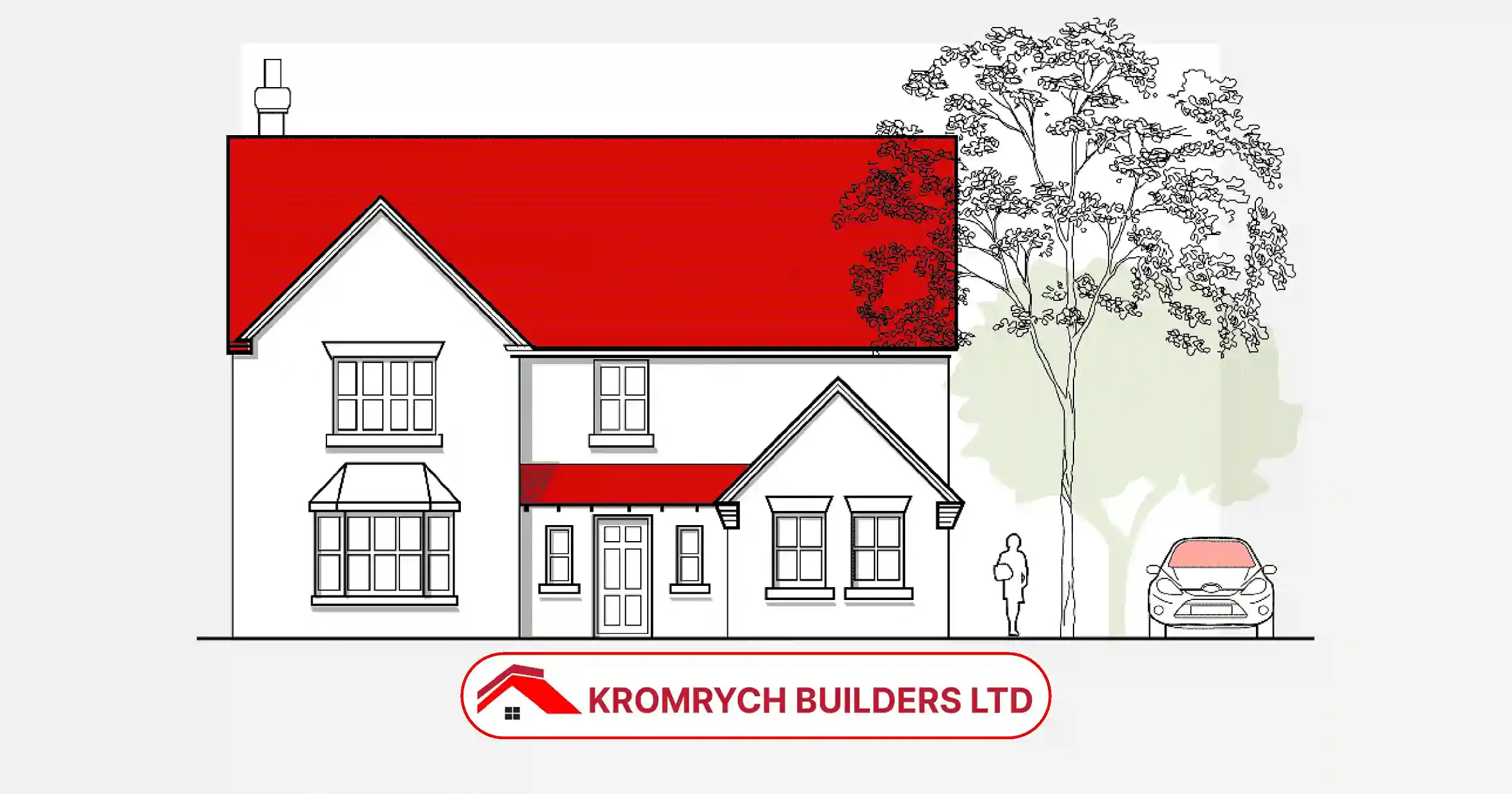
House Extension Rules: No Planning Needed?
When one wonders whether they want to create an extension on their house, one of the first questions most people ask themselves is: Do I need to get a house extension? The prospect of having more room to live in is very enticing. Before embarking on the building process, it is important to be aware of the legal issues that accompany house extensions, most notably the planning permissions. This blog will take you through the rules and regulations with particular mention to house extension in London, costs involved, and how you may be able to extend your house without ever requiring planning permission.
Being professionals on the market, Kromrych Builders is at hand to shed light and professional knowledge on the aspects of house extension permission, the planning process itself, as well as viable options in case the extension is constructed without official authorization.
Whether or not you would get planning permission when extending your house is determined by a number of factors. Major renovations in existence and or the visualization of the house usually require planning permission. Nonetheless, there are a few variations that might not need consent to planning, termed as Permitted Development Rights (PDR).
The Permitted Development Rights exist to enable homeowners to perform some work without planning permission. Local authorities grant these rights and are normally more relaxed in locations that are not subject to other controls (such as conservation areas or listed buildings).
The price of a house extension might differ significantly depending on the expansion magnitude, material arrangement, and the undertaken project. The prices in London tend to be more expensive as compared to the rest of the UK, and the explanation is that more services are in demand, and it is also more costly to live.
The cost may fluctuate, although to obtain a correct estimation, you are welcome to consult experienced builders such as Kromrych Builders, depending on your needs and location.
When making an extension on your house, you must seek planning permission for the house extension in case it is not under Permitted Development Rights. This entails submission of the plans of your proposed extension to your local council to be perused. That is a summary of the procedure:
Quite a number of homeowners would like to know whether they can add three metres to their houses without planning permission. Yes, in other cases under Permitted Development Rights, the extension should be okay.
According to the news, there was the possibility of some single-storey extensions to be up to 3 metres beyond the back wall of the house without having to acquire planning permission. This normally applies in terraced houses or semi-detached houses. But there are terms:
Detached houses have a maximum depth of 4 metres for a single-storey extension. Kromrych Builders is always ready to welcome clients who are at a crossroads or confused about whether or not their proposed extension can be covered under the Permitted Development Rights.
Due to the specific regulations in the London area, house extensions might have even more limitations. The conservation areas, Areas of Outstanding Natural Beauty (AONBs), or listed buildings should be subject to a more searching investigation and might not fall under Permitted Development Rights. For example:
Considering that planning permission in London is relatively complex, we advise you to check with an experienced builder, knowledgeable of the area rules, when pursuing your project. At Kromrych Builders, this is not a new procedure to us, as we have developed a knack for how to sail through these regulations when extending a house in London.
Although house extensions of specific sorts can be constructed as part of the Permitted Development Rights without the need for planning permission, you should follow the strict rules. These are some of the examples of extensions that might not need planning permission:
Nevertheless, although your extension may seem to fall within the scope of Permitted Development Rights, you will actually have to make sure that your proposals will comply with the building regulations. This involves ensuring that your extension is structurally sound, energy-efficient as well and code compliant in plumbing and electrical works.
In 2015, the Extended Permitted Development regulations were introduced by the government, which enable slightly bigger extensions of houses without the full planning permission. The rules are mainly on behalf of the house owners who want to expand the back of their homes. They enable homeowners to erect projects as extensions to oneself with a maximum area of 6 metres (terraced houses) or 8 metres (detached dwellings) with conditions.
With longer permitted development, though, your local authority will still have to be informed, and there are also some limitations that may be applied.
Whether with a small single-storey extension pertaining to a house or a large two-storey one, the planning permission process can be daunting. Fortunately, with the knowledge of the Kromrych Builders, you are able to have your house extension done in a hassle-free manner, be it the granting of a permission or the dispensation of a consent.
We are among the top building firms in London and understand the local planning policies well, so we can assist you in knowing whether you need planning permission for your extension, or if it can be built under Permitted Development Rights. We will assist you throughout the process and turn your vision of the house extension into reality, starting with the first consultation to the project's completion.
When you are intending to build a house extension and would like professional guidance on planning, budget, or even the application procedure, give us a call today at Kromrych Builders, and you will get a free consultation. Don't worry, we are here to assist!
Ready to bring your home vision to life? Our experienced team delivers top-quality construction, repairs, and refurbishments in London, Berkshire, Slough, Bracknell, and Reading - on time and within budget. Let’s turn your ideas into reality today!
Book A Free Consultation